

Recommend

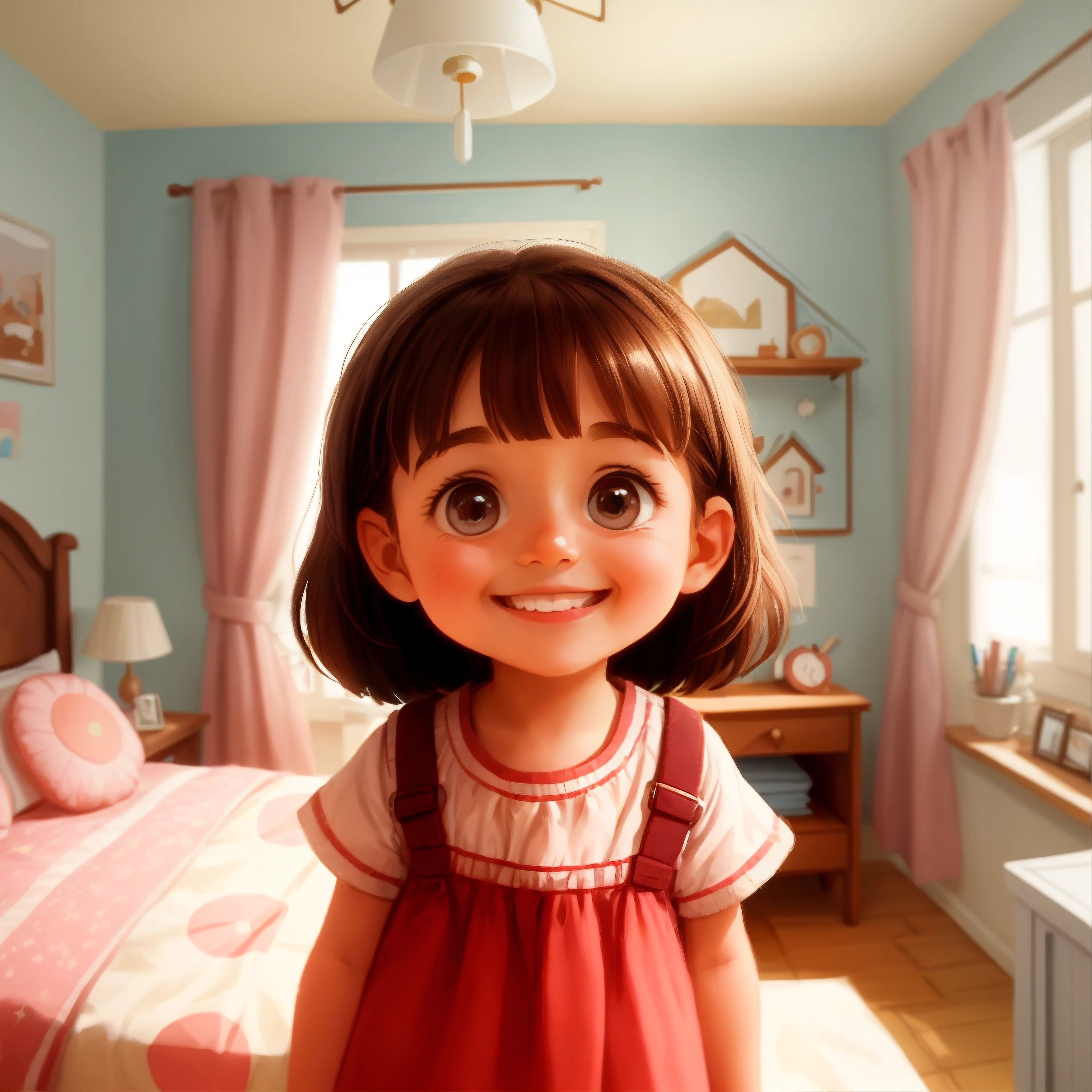
Lily and Aunt Mae would pull weeds, water the plants, and watch as the fruits and vegetables grew bigger and bigger. Lily loved picking the fresh tomatoes, carrots, strawberries, and fresh apples from the tree to eat. Aunt Mae would always let Lily have the first taste.

this is the story told by a 10 year old boy, who has golden brown hair and blue eyes. he is telling the story about his younger brother. this book is about his younger brother- who is 6 years old. who has autism. this book will be based around the special, magical world that his brother lives in, the special world of autism. in this world, his younger brother sees colors very bright & vibrant, hears sounds, uses methods to regulate himself. his younger brother has difficulty communicating, so he uses sign language, and visuals to describe what he feels. the aim of this book is to educate about the symptoms of autism and to advocate for kindness and acceptance the young boy with autism's name is Luke, he is very happy, smiley, has golden brown hair and bright blue eyes

Lisa was a bright and happy girl who loved her grandmother Tina very much. Lisa and Tina would do lots of things together, like cooking, watching movies together and doing crossword puzzles. When Tina dies, Lisa becomes very sad and withdrawn, she cries a lot and misses her grandmother everyday. Lisa the finds out that Tina left her a special gift before she died, a flower necklace. Everytime Lisa wears the necklace she feels brave and confident.

1. Karmie woke up in her bed, the sun peeking through her curtains. Her stuffed animals sat on her shelf and her favorite purple blanket made her feel warm. 2. She went to the bathroom where The sink was just the right height for her to reach, and her toothbrush had sparkly stars on it. She giggled as the minty bubbles filled her mouth. 3. Karmie skipped into the kitchen, where her breakfast waited for her. The smell of pancakes made her tummy rumble. She liked the way her chair fit just right at the table, and how the window let in the morning light. 4. After breakfast, it was time for some cartoons. Karmie settled onto the big, soft couch in the living room, hugging her dog, Reese, close. She loved this room, where she could cuddle up and watch her favorite shows. 5. It was time for Karmie and Reese to go outside. The trees were tall. Reese wagged his tail as they walked by the park, where Karmie played with her friends. 6.That night, her adults sat down with her. “Karmie,” they said, “we have some exciting news! We’re going to move to a new home soon.” Karmie felt her heart skip. 7. She held Reese's leash tightly as they walked to the moving truck. “I hope I like the new house,” she whispered to Reese. 8. When they arrived at the new house, Karmie took a deep breath and stepped inside. First, she saw her new bedroom. It was different, but still cozy, and her purple blanket was already on the bed. 9. In the new bathroom, her sparkly toothbrush was waiting by the sink, just like before. The kitchen smelled like pancakes, and Karmie noticed the sunlight pouring in through the windows, just like her old home. 10. That night she snuggled into her new bed. She still had her favorite things, her dog Reese, and most importantly, her family. “I think I’m going to love it here,” Karmie whispered, closing her eyes with a smile. 11. Karmie learned that even though she loved her old home, in her new home, she felt safe and happy, just like before.

Instruction: 1. illustration very simple During the Civil War, the Transcontinental Railroad aimed to link the U.S. coasts. The Central Pacific Railroad started in Sacramento, CA, employing Chinese laborers, and the Union Pacific in Omaha, NE, with Irish immigrants, Civil War veterans, and freed slaves. Up to 20,000 Chinese workers joined, including 12-year-old Li Wei and his father, who faced discrimination with lower pay and no food or housing. The work was extremely dangerous, with rockslides, explosions, and avalanches, especially in the Sierra Nevada, where workers faced harsh winters and isolation. Sadly, Li Wei’s father died in a rockslide. In 1867, Li Wei and many Chinese workers went on strike for better pay and conditions, but saw limited success. Tensions rose with Native American tribes, like the Cheyenne, who derailed a train near Plum Creek, NE, reflecting the challenges of westward expansion. Despite these struggles, progress continued. On May 10, 1869, the railroad was completed at Promontory Summit, UT, marking a new era in American transportation. Afterward, Li Wei and others faced discrimination in finding work and often lived in isolated Chinatowns. On October 24, 1871, violence erupted in Los Angeles’ Chinatown, killing 19 Chinese, including Li Wei’s friend. In 1875, grieving, Li Wei returned to China. The Transcontinental Railroad was transformative, yet costly for Chinese workers who made up most of the Central Pacific workforce. Facing discrimination and hazardous conditions, they were key to the railroad’s completion. Over 1,200 Chinese workers died, highlighting their sacrifice. Despite advancing U.S. infrastructure, they encountered ongoing hostility and laws against them. Their resilience underscores their overlooked role in shaping 19th-century America.

The adventures of Lily and Kikir with to save environment from the pollution. Determined to help their beloved river, Lily and Kikir embarked on a mission. They rallied their friends from the forest, including fairies, to form the "Nature Guardians" team. Together, they learned about various types of pollution: air pollution from factories and vehicles, water pollution from garbage and chemicals, and soil pollution from improper waste disposal. The Nature Guardians acted swiftly. They planted trees to clean the air, organized river cleanup days to remove trash, and educated the village residents about recycling and reducing waste. As the days passed, the river began to sparkle again, and the animals rejoiced. The air became fresher, and the flowers bloomed brighter than ever before.

Here in Hawaii, we know that culture is more than just celebration—it’s how we connect with family, friends, and the diverse world around us. For young children growing up in the vibrant community of BYU-Hawaii, Culture Night is a time where these connections shine brightest. But what does it feel like for a child to take that brave step from the audience to the stage? In “Tama’s Big Adventure at Culture Night,” we follow little Tama as he prepares for his first performance in the event that brings his whole community together. Guided by his parents, friends, and the spirit of aloha, Tama learns more than just the dance steps—he learns what it means to help others, work as a team, and celebrate the beauty of diversity. So why should you and your child join Tama on this adventure? Because this story isn’t just about performing on stage; it’s about the lessons of unity, kindness, and family that come from working together. For young readers, this book is a way to experience the joy of different cultures, and for parents, it’s a chance to teach that our differences are what make us stronger. Whether you’re from Hawaii or somewhere far away, the message is universal: we are better when we share, support, and celebrate together. “Tama’s Big Adventure at Culture Night” brings the spirit of Hawaii to life in a way that is fun, heartwarming, and perfect for little ones aged 2 to 4. Because in the end, isn’t the most important lesson we can teach our children that together, we are strong?

A magical story of a girl named Eden from Venus and her unicorn . The unicorn shows Eden how to meditate like a unicorn . There are fairies , rainbows , crystal castles.

I love my tablet. I love playing games and watching videos. I love it so much I take it everywhere and use it all the time. My mummy does not like my tablet. She thinks I use it too much. She only thinks that because she never had a tablet when she was young. Today, I went to use my tablet and the power turned off. I couldn’t play any games. I couldn’t watch any videos, and my tablet was dying. What in the world am I to do? I’ll die of boredom for sure. Five minutes without my tablet and I was pacing the floor. I just don’t know what to do. Mummy walks by, and simply says “Go outside.” Go OUTSIDE? Is she out of her mind? I’ll get itchy, and dirty. And it’s SO HOT! No way. I can’t do that. Mummy starts to go on and on about how she would play when she was young but that doesn’t change my mind at all. Besides, she has so much to say about how she used to play but I don’t see her going outside. “Come,” She said. “Let me show you what it was like in the good ole’ days.” Mummy took me outside and my skin started to melt off my bones. The grass was already pricking my skin, and a rock rolled right into my Crocs. Mummy didn’t mind any of my cries, and started to show us all the joys of her old life. That day, we climbed the mango tree until my sister Jana scraped her knee. We played hopscotch on the concrete using rocks to draw on the street. Daddy taught us how to shoot marbles in the dirt. Johnny lost and was very hurt. We made mud-pies and fed them to all the guys. We spinned and sang to the beat of our own drum, There’s a brown girl in the ring. Sha-la-la-la-la. There’s a brown girl in the ring sha-la-la-la-la. There’s a brown girl in the ring sha-la-la-la-la. And she looks like a sugar and a plum, plum, PLUM. So soon, it was time to go inside. Mummy picked the prickles off of my pants as I tried not to cry. The power was back on, but it was not as fun. Mummy was really right about them good ole’ days.

Once upon a time, in a vast and lush green forest, there lived a wise tortoise whom everyone respected. His name was Kavi. Kavi was old but very knowledgeable. Kavi lived by the edge of a great lake. His home was hidden inside an old log covered in moss. The animals of the forest loved visiting him because Kavi always told interesting stories and gave wise counsel. One day, a big argument broke out in the forest. The rabbit, Tikur, accidentally took the acorns that the squirrel, Mirmir, had collected to his own burrow. Mirmir was very angry about this, and the animals of the forest were divided. Some supported Tikur, while others sided with Mirmir. The argument grew louder, and the animals started shouting at each other. Finally, they all decided to go see Kavi. The wise tortoise asked everyone to listen carefully and then began to speak slowly: “My dear friends, first of all, we must stay calm. Tıkır, did you take Mırmır’s acorns on purpose, or was it a mistake?” Tıkır bowed his head in sadness and said, “It was not my fault. I only picked up the ones that had fallen to the ground and took them to my burrow, thinking they were mine.”Kavi smiled and turned to Mırmır: “Mırmır, my friend, we now see that Tıkır made a mistake. But would you rather forgive this mistake, or continue fighting?”Mırmır thought for a moment and then sighed: “I know my friend didn’t do this with bad intentions. But I was very upset when I lost my acorns.” Kavi nodded and spoke wisely: “We all make mistakes from time to time. What matters is that we acknowledge our mistakes and learn to forgive one another.” Tıkır immediately stood up and promised Mırmır that he would collect plenty of acorns for him. Mırmır forgave him, and the two old friends made peace. From that day on, whenever there was a disagreement in the forest, the animals remembered Kavi’s wise words. The greatest lesson Kavi had taught them was about friendship and understanding.

Criar uma caricatura de pai e filho brincando. O pai tem 20 anos, é negro e sem pelos no rosto. O filho tem 1 ano, é de pele clara e cabelo marrom liso.

**The Blue Eyes** Lena liked the café for its quiet predictability—familiar faces, muted conversations, and the hum of rain on the windows. It was her refuge, a place where no one expected anything of her. That’s when she noticed him. He sat by the window, ordinary in every way except for his eyes—blue, startlingly vivid, like they saw through her. When he glanced her way, Lena quickly looked down, her heart unexpectedly quickening. Moments later, she heard his voice. “Is this seat taken?” Startled, she stammered, “No, go ahead.” He sat across from her, casual but assured. “I’m Michael,” he said, his gaze steady. “Lena.” Their conversation began awkwardly but quickly fell into an easy rhythm. They talked about books, the rain, nothing extraordinary—yet everything about it felt significant. His presence was magnetic, his words strangely familiar, as though they were picking up a thread they’d left unfinished. --- Michael started appearing more often, each visit deepening their bond. He knew little details about her—how she always ordered her coffee black, how she twisted her ring when nervous. “You notice a lot,” Lena said one day, half-joking. He smiled, almost apologetic. “I don’t mean to. It’s just... you feel familiar. Like I’ve known you before.” Lena’s chest tightened. She felt it too—that inexplicable pull, as if their lives had crossed in ways neither could explain. But she didn’t ask what he meant. Some feelings were too fragile to question. --- Then one day, he disappeared. Lena waited, watching the door every afternoon, her heart sinking when he didn’t come. She texted him, but there was no reply. Days turned into weeks. She went to the café out of habit, but the empty chair across from her was impossible to ignore. He was gone. Sitting by the window one rainy evening, she let the memory settle in her chest like a bittersweet ache.

A long time ago, in a faraway place where the sky stretched big and wide . This wonderful secret comes from the land of Africa, a place older than the oldest tree, filled with the most exciting tales you could ever hear. In this amazing land, where trees are so tall they seem to tickle the clouds, there lived a tiny bat named Ndutu. Ndutu's story has been told so many times that people sometimes change the names just to keep it a fun surprise for everyone. But Ndutu’s adventure is not just about why he and his bat friends prefer the night. Oh no, it's much more than that! It's a story about making friends, having to say goodbye sometimes, and finding little specks of light even when it’s really dark outside. So why do bats like Ndutu love the night so much? Well, that’s the secret we’re about to discover together. And as we find out, we'll also learn about the special magic of friendship and how it can light up even the darkest places.

boy who struggles to learn mathematics gets creative

1. Aisha and Nia, best friends in a small village, loved exploring together. 2. One sunny day, they decided to go on a treasure hunt. 3. Nia brought a map, and Aisha brought her lucky red ribbon. 4. Along the way, they saw animals who joined them for a bit. 5. They collected a shiny pebble and a colorful feather for their treasure bag. 6. They crossed an old bridge into the forest, hand in hand. 7. Under some leaves, they found a heart-shaped blue stone. 8. The friends cheered—they’d found their treasure! 9. Aisha tied her red ribbon around the stone and gave it to Nia. 10. The heart stone reminded them that they’d always be friends.

In the small town of Maplewood, hidden within the dusty shelves of the old library, lies a secret: a magical world accessible only to those who discover the Rainbow Keys. When siblings Emma and Jake stumble upon an ancient book, they are whisked away to a realm where books come to life, and every page is an adventure. Guided by a wise old librarian and a mischievous talking cat named Whiskers, they must find all seven Rainbow Keys to unlock the secrets of the Enchanted Library and save it from an impending darkness. Along the way, they encounter friendly dragons, solve riddles with giggling goblins, and learn the true power of imagination and teamwork.

"Benito's Chicken Delight" charmingly captures the story of Benito, an exuberant Border Collie with an extraordinary love for chicken. Every time he smells chicken cooking, his ears perk up, his eyes sparkle with anticipation, and his tail wags in unbridled joy. This simple yet heartwarming tale wonderfully illustrates the profound happiness that small pleasures bring to our furry friends. Aimed at young readers, it not only entertains with its depiction of Benito's delightful antics but also subtly teaches the importance of appreciating the little joys in life. The story is a delightful read for any child, encapsulating the essence of happiness and contentment in a dog's perspective.

BENITO FUE UN PERRO ADOPTADO POR ELIA

a grup of 5 children do what they agaainst bullying in their school first Ana see that a new boy is cryng because others collegues laught about him

Lila loved rainy days. Her big, bright umbrella, covered in rainbow colours, popped open with a whoosh! One drizzly afternoon, she called to her friends, “Come stand under my umbrella!” Tom, who found loud noises tricky, stepped in. “It’s quieter here,” he said. Amira, who loved words, sang, “A shelter bright, it feels just right!” Jake, full of exciting ideas, Rosie, who thought carefully, and Max, who loved to twirl, all joined in. Miss Patel watched them and smiled. “Your umbrella reminds me of the neurodiversity umbrella,” she said. “The what?” asked Lila. “Neurodiversity is a big umbrella term for the different ways people’s brains work,” Miss Patel explained. “Like how Tom prefers quiet, Amira plays with words, Jake’s mind buzzes with ideas, Rosie takes her time, and Max moves in his own way.” “So we all fit under the same umbrella?” asked Jake. “Exactly,” Miss Patel said. “Some people are autistic, some have ADHD, some are great at music or maths, and some find reading tricky. The world is better because we all think and feel differently.” Lila smiled at her colourful umbrella. “That means everyone belongs.” The children huddled closer, happy under their amazing umbrella. The rain kept falling, but they didn’t mind—because under the umbrella, they were all together.